
Lewitt RAY Review: The "Autofocus" Microphone That Follows Your Moves
Overview
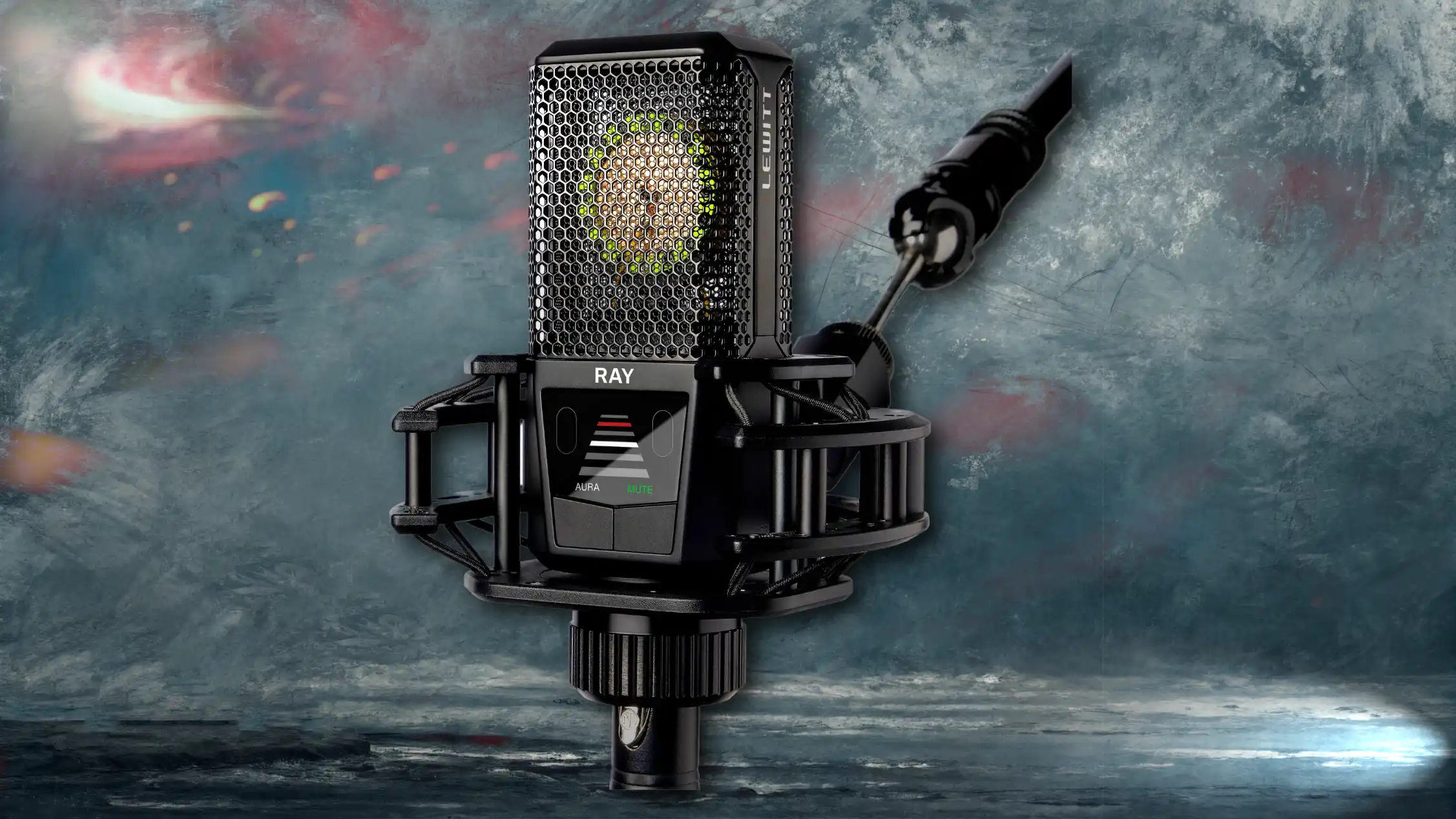
The Lewitt RAY represents a genuine leap forward in microphone technology, bridging the gap between studio-grade sound and the dynamic realities of modern content creation. Released in 2024 and quickly tagged as a "Game Changer" by industry retailers, the RAY is built upon the chassis and capsule of Lewitt’s best-selling LCT 440 PURE.
However, it distinguishes itself with AURA, a sensor-based technology that acts like autofocus for audio. Using invisible time-of-flight sensors, the microphone measures your distance and automatically adjusts your level and tone in real-time. It aims to solve the "proximity effect" problem, allowing streamers and podcasters to lean back or move around without their audio becoming thin or quiet.
Key Features
- AURA Technology: Automatically adapts level and tone based on the distance of the user (ranges from 5 to 100 cm).
- MUTE by Distance: Automatically mutes the audio when the user steps beyond a customizable distance threshold.
- 1-inch True Condenser Capsule: Based on the LCT 440 PURE, delivering studio-quality resolution.
- Dedicated Physical Mute Button: A rare and highly requested feature for an XLR microphone.
- Low Self-Noise: Ultra-quiet operation at just 8 dB(A).
- Record-Ready Sound: Optimized frequency response designed to require minimal post-processing.
Professional Reviews Summary
Professional audio publications have largely praised the RAY for successfully executing a concept that could have easily been a gimmick. Sound on Sound highlights the ingenuity of the AURA system, noting that "Lewitt have created a simple, effective and mostly foolproof solution to a genuine real-world problem, and it works beautifully" (Inglis). They confirmed the sensor tracks distance smoothly with "no discernible lag" or artifacts.
Tape Op found the RAY to be a "fantastic vocal mic that will save you time on vocal editing," describing the sound as "mix-ready" and "bright in a flattering way" without the harshness often found in budget condensers (Morse). However, reviewers like Larry Jordan noted that while the technology is impressive, the proximity effect compensation might initially sound unusual to ears trained on traditional broadcast mics, describing the highs as "perhaps a bit too crisp" for some voices (Jordan).
User Sentiment Summary
User feedback on forums like Reddit and Gearspace reflects a mix of initial skepticism and eventual delight. Before launch, many users feared the sensor tech was "snake oil," but post-release discussions have shifted toward appreciation for its utility in streaming setups. Streamers love the "MUTE by Distance" feature, which prevents the awkwardness of broadcasting background noise when they leave their desk ("Lewitt RAY Live Sound").
A recurring technical note from users is that the RAY requires more preamp gain than standard condensers; because AURA works by attenuating the loud (close) signals to match the quiet (far) ones, users with budget interfaces may need to crank their gain knobs higher than expected ("Why does the Lewitt Ray").
Pros and Cons
Pros
- Consistent Levels: AURA technology effectively keeps volume steady even when you move in your chair.
- Tone Balancing: Actively fights the "thinning out" of voice as you lean back.
- Smart Muting: "MUTE by Distance" is a workflow lifesaver for live streamers.
- Studio Heritage: Delivers the pristine, detailed sound of the LCT 440 PURE.
- Quality Accessories: Includes a high-quality shock mount and magnetic pop filter.
Cons
- High Gain Requirement: Requires healthy preamp gain to compensate for the AURA attenuation.
- Modern Voicing: The "mix-ready" brightness may be too modern for those seeking a vintage, warm broadcast tone (e.g., SM7B style).
- Aesthetic: The white LED distance bars on the mic face are functional but may not suit every studio's visual vibe.
Ideal For
This microphone is the ultimate problem-solver for Streamers, YouTubers, and Podcasters who record in untreated rooms or simply cannot sit perfectly still. It is also an excellent choice for musicians recording demos who want to focus on their performance rather than microphone technique.
Competing Products
When looking at alternatives, there are a few key competitors to consider:
- Lewitt LCT 440 PURE: The sibling without the sensors. It offers the exact same capsule and sonic signature for a lower price, ideal for those with perfect mic technique who don't need the "smart" features.
- Shure SM7B: The broadcast industry standard. It is a dynamic mic (not condenser) known for a darker, warmer sound and excellent noise rejection, but it lacks the detail and "autofocus" technology of the RAY.
- Rode NT1 5th Gen: Another modern innovation, offering 32-bit float recording (to prevent clipping) via USB, though it lacks the distance-sensing capabilities of the RAY.
Works Cited
- Inglis, Sam. "Lewitt RAY." Sound on Sound, May 2024, https://www.soundonsound.com/reviews/lewitt-ray.
- Jordan, Larry. "Review: LEWITT RAY Microphone, with AURA Technology." Larry Jordan, 26 Apr. 2024, https://larryjordan.com/articles/review-lewitt-ray-microphone-with-aura-technology/.
- "Lewitt RAY Live Sound Stress Testing/Review." Reddit, r/audioengineering, 21 Nov. 2024, https://www.reddit.com/r/audioengineering/comments/1gxczz1/lewitt_ray_live_sound_stress_testingreview/.
- Morse, Daniel Ryan. "RAY Condenser Mic." Tape Op, No. 161, https://tapeop.com/reviews/gear/161/ray-condenser-mic/.
- MusicRadar. "Lewitt Ray review." MusicRadar, 17 June 2024, https://www.musicradar.com/reviews/lewitt-ray-review.
- "Why does the Lewitt Ray need 50 gain to be in a good level?" Reddit, r/Lewitt, 24 Sept. 2024, https://www.reddit.com/r/Lewitt/comments/1foes55/why_does_the_lewitt_ray_need_50_gain_to_be_in_a/.